

Where AI Can Assist Leaders, and Where Human Oversight Stays Essential
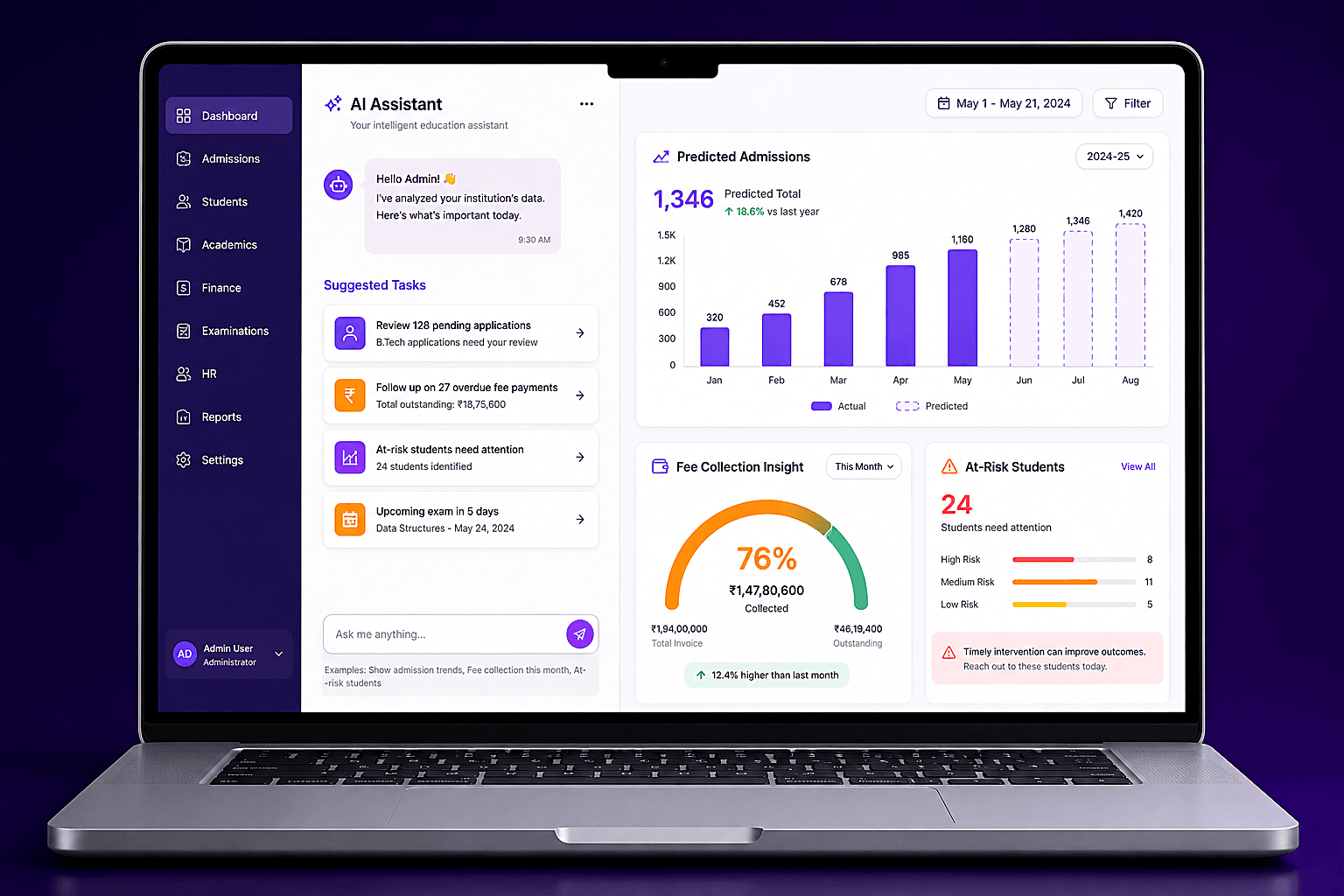
Framing analytics, assistants and roadmap capabilities with clear availability labelling.
Key takeaways
- AI is most useful for summarising, flagging and drafting, not deciding.
- Decisions about students stay with people.
- Be clear about which capabilities are available, in pilot or planned.
01Useful today: summarise, flag, draft
The most practical uses of AI in administration are modest: summarising large reports, flagging unusual patterns for a person to review, and drafting routine communication for staff to edit.
AI is most useful for summarising, flagging and drafting, not deciding.
02Where people stay in charge
Admissions decisions, disciplinary matters, grading outcomes and anything affecting a student's progression should remain human decisions. AI can prepare information, but accountability stays with staff.
- Clear review steps before any action
- Explanations alongside every flag
- Easy ways to correct or dismiss suggestions
03Honest labelling
Institutions should expect vendors to label each AI capability as available, in pilot or planned. Clear labelling builds trust and makes procurement decisions easier.
CareerBook Editorial Team
Insights for education leaders. This is sample content to preview the article layout; the final article will be supplied by the CareerBook ERP team.